Climate science
Net zero explained: what it means, why 2050, and how far the world is
Net zero means adding no more greenhouse gases to the atmosphere than we take out. Here is what the term really covers, where the 2050 date comes from, and what the numbers say about progress.

What does net zero mean?
Net zero means that the greenhouse gases humans add to the atmosphere are balanced by the amount humans deliberately remove from it. The IPCC defines net zero CO₂ emissions as the point where human-caused CO₂ emissions are balanced by human-caused CO₂ removals over a set period. Emissions do not have to be literally zero, but what remains has to be matched by removals such as new forests or CO₂ captured and stored underground.
This matters because of how warming works. Global temperature rises roughly in proportion to the total CO₂ ever emitted, so warming only stops increasing once CO₂ emissions reach net zero. As long as the world emits more than it removes, the live CO₂ counter keeps climbing and so does the temperature.
Why net zero by 2050? What the IPCC says
The 2050 date comes from climate science, not politics. In 2018 the IPCC’s Special Report on 1.5 °C found that limiting warming to 1.5 °C with no or limited overshoot required global net CO₂ emissions to fall about 45% from 2010 levels by 2030 and to reach net zero around 2050 (an interquartile range of 2045–2055).
The later Sixth Assessment Report (AR6) refined this. Its Synthesis Report (2023) states that pathways limiting warming to 1.5 °C (with a better than 50% chance) with no or limited overshoot reach net zero CO₂ in the early 2050s, while pathways limiting warming to 2 °C (with a better than 67% chance) reach it around the early 2070s. Many of these pathways then go below zero, removing more CO₂ than they emit.
| Year | All greenhouse gases | CO₂ only |
|---|---|---|
| 2030 | −43% | −48% |
| 2035 | −60% | −65% |
| 2050 | −84% | −99% (net zero CO₂ in the early 2050s) |
These are medians across many modelled scenarios, each with a range. The message is the shape: emissions roughly halve this decade and CO₂ reaches net zero around mid-century. A 2050 target that leaves most cutting until the 2040s is not the same path, because warming follows the cumulative total.
Net zero vs carbon neutral vs climate positive
These terms are often used as if they were interchangeable. For the whole planet, the IPCC treats carbon neutrality and net zero CO₂ as equivalent. For companies and products they have come to mean quite different things:
| Term | What it usually means | Typical weak point |
|---|---|---|
| Net zero | Cut emissions as far as possible (by at least 90% under the SBTi standard), then neutralise the residual with carbon removals | Long target dates with few near-term cuts |
| Carbon neutral | A footprint balanced in a given year, often mainly with purchased offsets; ISO 14068-1 (2023) set rules for such claims | Offsets that avoid emissions elsewhere do not remove CO₂ already emitted |
| Climate positive / carbon negative | A claim to remove or offset more than is emitted | No agreed standard definition; usually rests on offsets |
Regulators have started to act on the difference. Since 27 September 2026, EU consumer law (Directive 2024/825) bans claims that a product has a neutral, reduced or positive greenhouse gas impact when the claim is based on offsetting.
The role and limits of carbon removal and offsets
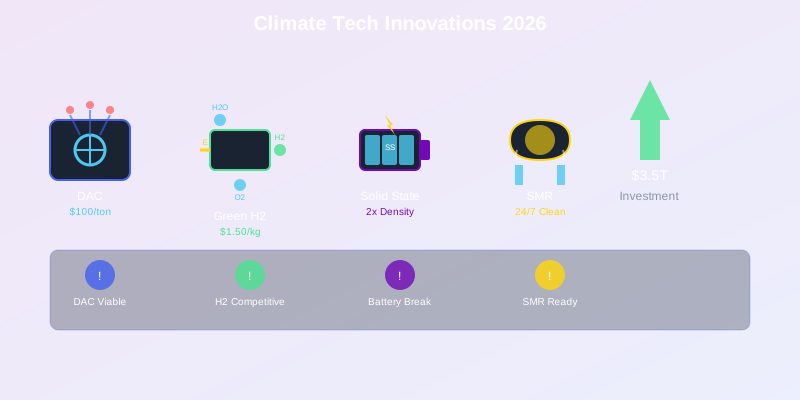
Removals are part of every net zero pathway: to balance emissions that cannot be eliminated, such as some from cement, aviation and farming, and later to pull CO₂ back down. But they are small today. The State of Carbon Dioxide Removal report (2024) estimates that about 2 billion tonnes of CO₂ a year are removed, almost all by forests, and only about 1.3 million tonnes by newer methods such as direct air capture, biochar and bioenergy with carbon capture. That compares with 42.2 billion tonnes of CO₂ emitted in 2025.
Credible net zero rules therefore limit what removals and offsets can do:
- Oxford Offsetting Principles (revised 2024): cut emissions first, shift from credits that avoid emissions to credits that remove CO₂, and move towards removals with durable storage lasting centuries to millennia by mid-century.
- SBTi Corporate Net-Zero Standard: companies must cut emissions to residual levels by 2050 at the latest, which under the first version meant cutting at least 90% in most sectors, and neutralise the rest with removals. Version 2.0, published in June 2026, keeps that structure and requires 100% of residual emissions to be neutralised with eligible removals from the net zero year.
- ISO 14060: a draft international net zero standard that would also confine carbon credits to residual emissions. It went to public consultation in June 2026, did not pass its first ballot in the autumn and is being revised.
Which countries have net zero targets?
Most of the world now has one. The Net Zero Tracker’s Net Zero Stocktake 2025 (September 2025, the latest annual stocktake at the time of writing) counted 137 of 198 national governments with net zero targets, including the EU. Together they cover:
Coverage fell by 13 percentage points for emissions and 16 for GDP compared with 2024, mainly because the United States abandoned its federal target. Counting the 19 US states with their own net zero targets, GDP coverage rises to 83%. Quality is improving: 67% of national targets are now set in law or formal policy, up from 52% in 2024. The tracker also found that 63% of the Forbes Global 2000 largest listed companies have net zero targets, though most still fall short of its best-practice criteria.
| Economy | Net zero target | Status and latest step |
|---|---|---|
| European Union | Climate neutrality (net zero GHG) by 2050 | In law (European Climate Law, 2021). A 90% net cut by 2040 versus 1990 entered into force in April 2026, with up to 5% from international credits from 2036. |
| China | Carbon neutrality before 2060 | Policy commitment since 2020. Its 2035 plan, submitted in November 2025, cuts net GHG emissions 7–10% from peak levels. |
| United States | None at federal level | The 2050 target of 2021 was abandoned in 2025. The Paris Agreement exit took effect on 27 January 2026; the exit from the UN climate convention takes effect on 27 February 2027. |
| India | Net zero by 2070 | Announced at COP26 in 2021. Its 2035 plan, submitted in April 2026, cuts emissions per unit of GDP 47% from 2005 and targets 60% non-fossil power capacity (conditional on international finance). |
| United Kingdom | Net zero GHG by 2050 | In law since 2019 (Climate Change Act). |
| Germany | GHG neutrality by 2045 | In law (Federal Climate Change Act). |
You can see how each country’s emissions compare in the CO₂ emissions by country ranking. China, the United States and India alone produced about 53% of fossil CO₂ in 2024.
What has to happen this decade
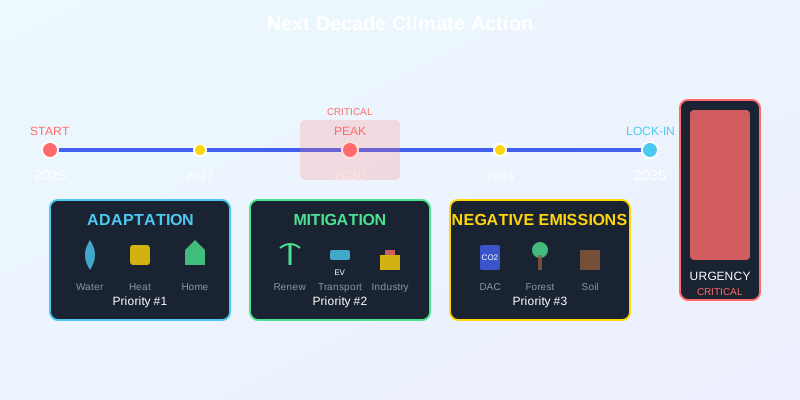
A net zero target is a destination. What decides the temperature is the route. In the IPCC’s 1.5 °C pathways, global greenhouse gas emissions fall 43% by 2030 and 60% by 2035 compared with 2019, and CO₂ emissions fall 48% by 2030. In practice that means:
- Electricity moving rapidly to wind, solar and other low-carbon sources, and coal power falling steeply.
- Cars, heating and much of industry switching to electricity.
- Deep, fast cuts in methane from fossil fuels, farming and waste.
- Deforestation halted, so land stops being a large source of CO₂.
Because emissions have kept rising since 2019, the cuts required from today are now steeper. UNEP’s Emissions Gap Report 2026 concludes that 1.5 °C will be exceeded and that its lowest-overshoot pathway needs cuts of 18% by 2030 and 45% by 2035 from 2025 levels. If fully implemented, current national plans would cut emissions only 5–8% by 2030. Our post on the next decade of climate change looks at this gap in more detail.
How far is the world from net zero?
Still a long way. According to the Global Carbon Budget 2025, fossil CO₂ emissions reached a record 38.1 billion tonnes in 2025, up 1.1%. With 4.1 billion tonnes from land-use change, total CO₂ emissions were about 42.2 billion tonnes. Global emissions have not yet peaked.
The remaining carbon budget for a 50% chance of holding warming to 1.5 °C was about 170 billion tonnes of CO₂ from the start of 2026, roughly four years of emissions at the 2025 rate. That is why most assessments now expect a temporary overshoot of 1.5 °C, followed by efforts to bring temperatures back down, which would need net negative emissions.
Net zero targets still matter. UNEP’s 2026 report projects about 2.8 °C of warming by 2100 under current policies, 2.6 °C if all national pledges are met and about 2.1 °C if net zero targets are also delivered. That gap is the value of turning targets into policy.
What net zero means for you
Net zero is set by governments and companies, but it is reached through everyday systems: how homes are heated, how people travel and what they eat. For an individual it means gradually moving those choices onto low-carbon options, rather than buying offsets to cancel out an unchanged lifestyle. The world average is about 4.7 tonnes of fossil CO₂ per person a year, and much higher in many rich countries.
A review of consumption options (Ivanova et al., 2020) found that the changes with the most effect are living car-free (about 2 tonnes CO₂e a year), renewable electricity (a median of about 1.6 tonnes), a heat pump and a plant-based diet (roughly 0.8–0.9 tonnes). Skipping one long-haul return flight saves about 1.7 tonnes.
- Work out your footprint first with our carbon footprint calculator, so you know which category is largest.
- At the next natural replacement point, such as a new car, boiler or energy contract, choose the electric or renewable option.
- Treat any offsets you buy as a contribution to climate projects, not as cancelling your emissions, and prefer removals with long-lasting storage.
- Check what your employer, pension fund and local government have committed to, and whether there is a plan with interim targets for 2030 and 2035.
Questions and answers
What does net zero mean in simple terms?
Net zero means that the greenhouse gases people put into the atmosphere are balanced by the amount people deliberately take out, for example by growing forests or storing captured CO₂ underground. Emissions fall as far as possible first, and removals cover only the small remainder.
What is the difference between net zero and carbon neutral?
At the global level the IPCC treats carbon neutrality and net zero CO₂ as the same thing. For companies and products, “carbon neutral” has usually meant balancing a footprint with offsets bought today, while net zero standards require deep cuts first, typically around 90%, and allow only carbon removals for what is left.
Why is net zero by 2050 the target?
Because the IPCC found that pathways limiting warming to 1.5 °C with no or limited overshoot reach net zero CO₂ around 2050 (early 2050s in the latest assessment). Pathways that hold warming below 2 °C reach it around the early 2070s. The date is a scientific estimate, not a legal deadline.
Which countries have net zero targets?
In September 2025, the Net Zero Tracker counted 137 of 198 national governments with net zero targets, covering at least 74% of global greenhouse gas emissions. They include the EU (2050), the UK (2050), Germany (2045), China (before 2060) and India (2070). The United States no longer has a federal target.
Is the world on track for net zero?
No. Global fossil CO₂ emissions reached a record 38.1 billion tonnes in 2025, up 1.1%. UNEP’s Emissions Gap Report 2026 projects about 2.6 °C of warming by 2100 if all national pledges are met, and about 2.1 °C if net zero targets are also delivered.
Sources
- Climate Change 2023: Synthesis Report, Summary for Policymakers, IPCC, 2023
- Climate Change 2022: Mitigation of Climate Change, Summary for Policymakers, IPCC Working Group III, 2022
- Annex VII: Glossary, Climate Change 2021: The Physical Science Basis, IPCC Working Group I, 2021
- Global Warming of 1.5 °C, Summary for Policymakers, IPCC, 2018
- Net Zero Stocktake 2025, Net Zero Tracker (Energy and Climate Intelligence Unit, Data-Driven EnviroLab, NewClimate Institute, Oxford Net Zero), September 2025
- Global Carbon Budget 2025, Global Carbon Project, 2025
- Emissions Gap Report 2026: The Point of Return, UN Environment Programme, 2026
- The Oxford Principles for Net Zero Aligned Carbon Offsetting (revised 2024), University of Oxford, 2024
- Corporate Net-Zero Standard Version 2.0 Criteria, Science Based Targets initiative, June 2026
- The Corporate Net-Zero Standard, Science Based Targets initiative
- ISO launches public consultation on the world’s first International Standard for net zero alignment, ISO, June 2026
- Directive (EU) 2024/825 on empowering consumers for the green transition, Official Journal of the EU, 2024
- The State of Carbon Dioxide Removal, 2nd edition, Smith et al., 2024
- European Climate Law, Regulation (EU) 2021/1119, Official Journal of the EU, 2021
- 2040 climate target, European Commission, 2026
- 2040 climate target: Council gives final green light, Council of the EU, 5 March 2026
- China: 2035 NDC assessment, Climate Action Tracker, 2025-2026
- Statement: India announces new 2035 climate commitment, World Resources Institute, 2026
- India: 2035 NDC assessment, Climate Action Tracker, 2026
- USA: targets, Climate Action Tracker
- Paris Climate Agreement withdrawal tracker, Environmental and Energy Law Program, Harvard Law School, 2026
- Depositary notification C.N.102.2026.TREATIES-XXVII.7: United States withdrawal from the UNFCCC, United Nations, 2026
- The Climate Change Act 2008 (2050 Target Amendment) Order 2019, UK legislation
- Federal Climate Change Act (Bundes-Klimaschutzgesetz), Germany
- CO₂ emissions, Our World in Data (based on Global Carbon Project data), 2025
- Ivanova et al., Quantifying the potential for climate change mitigation of consumption options, Environmental Research Letters, 2020
- Greenhouse gas reporting: conversion factors 2025, UK Department for Energy Security and Net Zero, 2025